 Okta
OktaThe program today
The program is real.
The picture never is.
Controls in a spreadsheet. Vendors in a shared drive. The roadmap in a deck nobody has opened since November. Every quarter you rebuild the same picture by hand, and by the time the board sees it, it's already describing a program that has moved on.
Where it actually livesLast touched
risk-register_Q3_v14.xlsx6 weeks ago
Board_Deck_FINAL_v7.pptx4 months ago
vendor-questionnaire (draft).docx11 days ago
pen-test-report-2025.pdf1 year ago
incident-response-plan.docx2019
Every one of these is the same program
The platform
Three moments.
One record underneath.
Most teams arrive through one of three doors. Whichever you walk through, you land on the same record: the same controls, the same vendors, the same evidence, the same analyst.
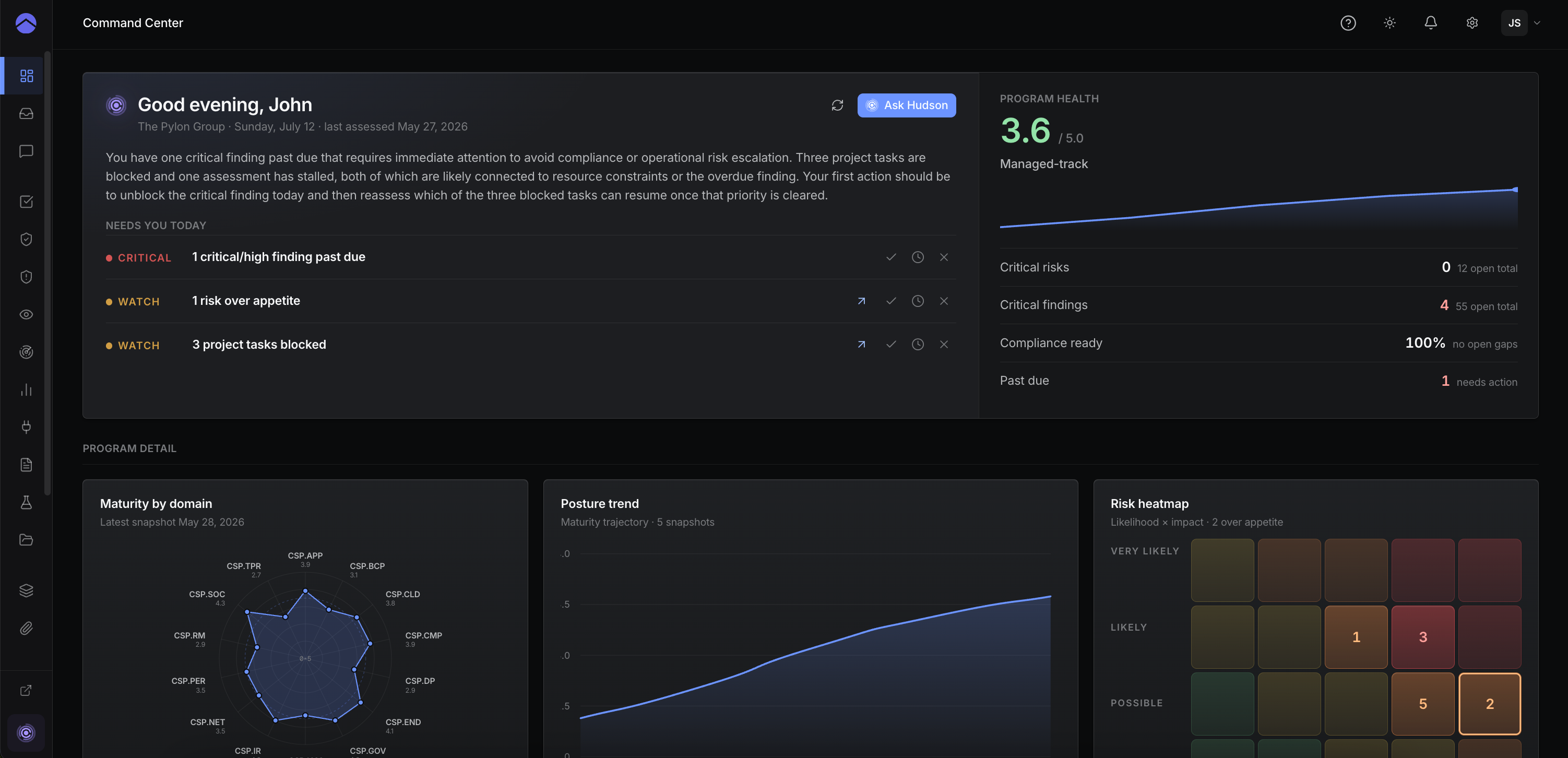
Is the security program actually moving?
The workspace the program runs in. A live roadmap, findings worked to closure, assessments drafted from real evidence, and a board deck that is current because it was never built by hand.
- Controls and maturity scored against the framework you report on
- Findings assigned, aged, and worked to closure
- Board reporting generated from the live record
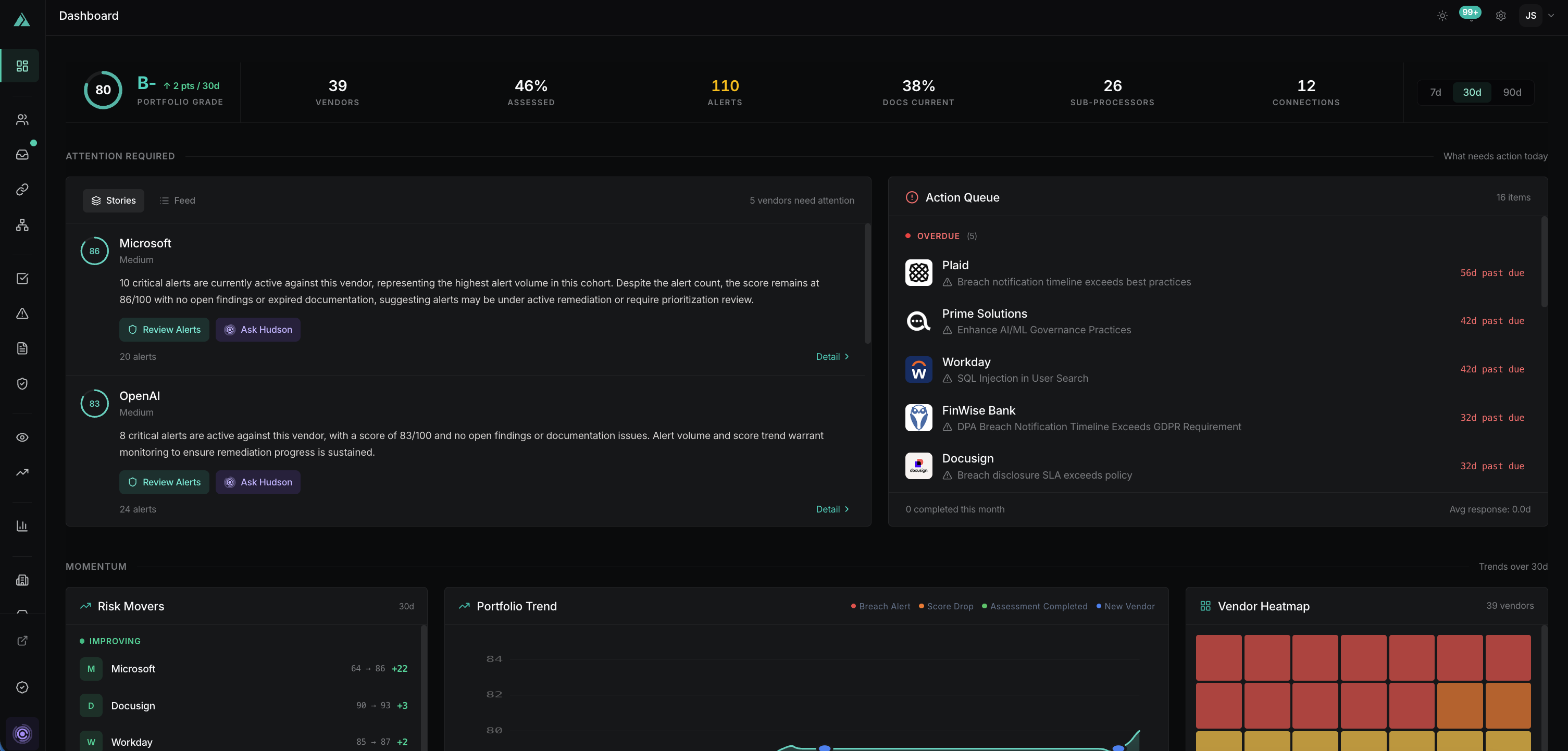
A vendor just had a breach. What's exposed?
Scout watches the third parties you depend on and answers that in minutes instead of days. Which systems, which data, which contract clause, and what to send the vendor tonight.
- Continuous monitoring across the vendor portfolio
- Exposure traced to systems, data, and contract terms
- Assessments and outreach drafted for review
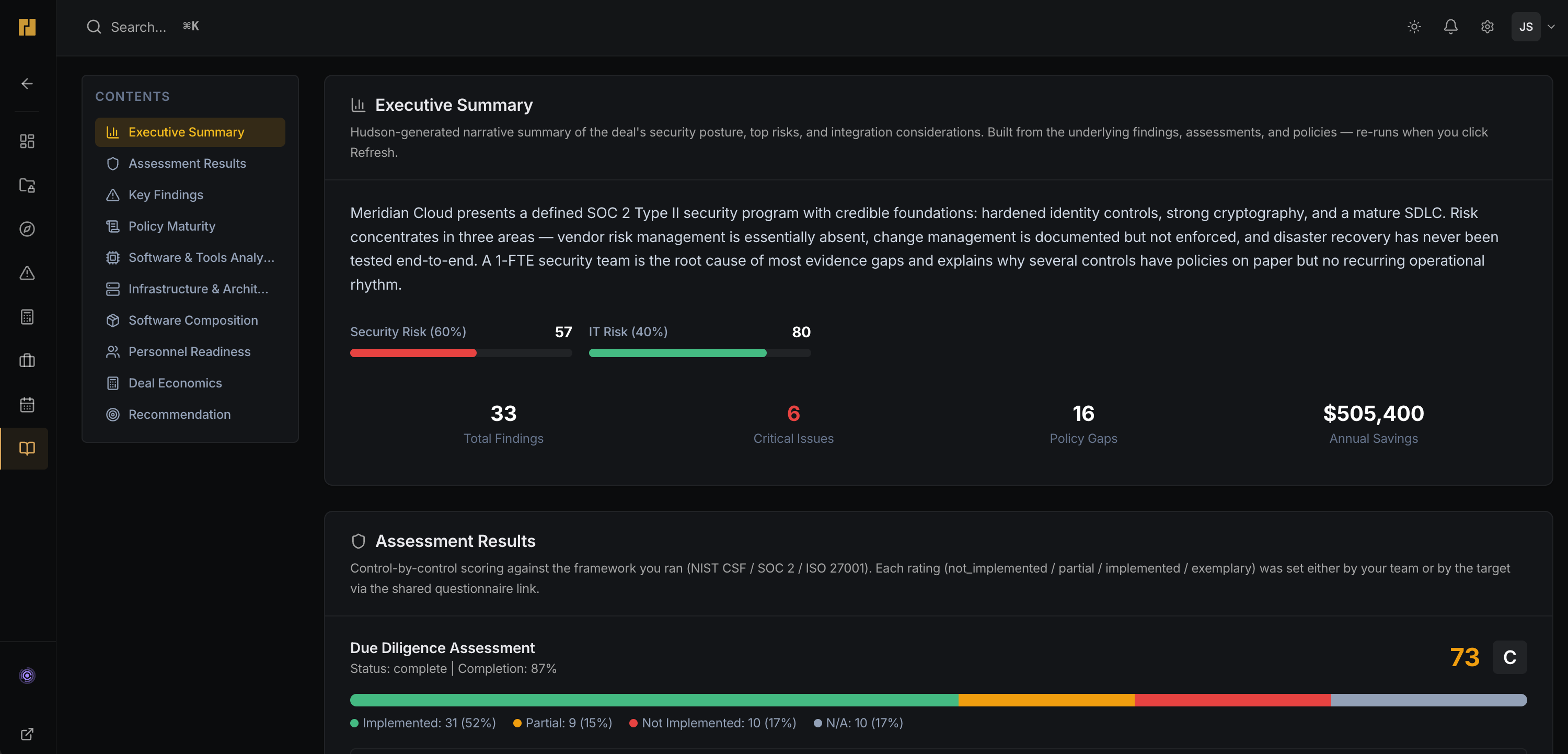
We're acquiring. What are we actually buying?
One record from pre-LOI screening through diligence to Day-1 integration, with every finding rated, priced into the deal model, and handed to the team that has to own it after close.
- Screening and diligence on one pipeline
- Findings rated and priced into the deal model
- Day-1 integration plan handed to the owning team
Hudson
The analyst
One analyst.
Every module.
Because the program lives in one record, an analyst can finally read all of it. Hudson investigates, drafts, and plans across Command, Scout, and Anvil, then stops and asks before it acts. Not a chatbot bolted onto a dashboard. An analyst with the whole file open.
09:12
 Scout
Vantage Cloud disclosed a breach.
Traced our exposure across four systems, drafted the response plan, and held it for your approval.
11:40
Scout
Vantage Cloud disclosed a breach.
Traced our exposure across four systems, drafted the response plan, and held it for your approval.
11:40
 Command
Board deck for Thursday.
Built eleven slides from live findings, every figure linked back to the record it came from.
15:03
Command
Board deck for Thursday.
Built eleven slides from live findings, every figure linked back to the record it came from.
15:03
 Anvil
Finding 212, Nexus Health.
Rewritten, rated Critical, and priced at $180K into the deal model.
Anvil
Finding 212, Nexus Health.
Rewritten, rated Critical, and priced at $180K into the deal model.
Scout
Vantage Cloud disclosed a breach.
Traced our exposure across four systems, drafted the response plan, and held it for your approval.
11:40
Command
Board deck for Thursday.
Built eleven slides from live findings, every figure linked back to the record it came from.
15:03
Anvil
Finding 212, Nexus Health.
Rewritten, rated Critical, and priced at $180K into the deal model.
One working day · one analyst · three products
Why it holds
One record.
Four reasons it stays true.
Identity, cloud, code, endpoint, and ticketing. Pylon reads live configuration from the tools you already run, so the program updates itself instead of waiting on a quarterly evidence request.
01One record
Controls, vendors, findings, and evidence are the same objects in every module. Nothing is re-entered, nothing drifts.
02Wired in
Sixty-plus connected sources read live configuration, so posture reflects the estate as it is today.
03One analyst
Hudson reads across the whole record, drafts the work, and asks before it acts.
04Operators, not observers
Built by a practicing CISO and CIO who still sit inside the programs running on it.
Okta Entra ID
 AWS
AWS Azure
Azure Google Cloud
 GitHub
 Wiz
Wiz CrowdStrike
 Palo Alto
89 of 68 connected sourcesSee all integrations →
Who built it
Built by operators,
not observers.
Pylon comes from The Pylon Group, a team led by a practicing CISO and CIO. We built the operating platform we wished existed when we were the ones answering to the board, and we still sit inside programs, in the seat, alongside the teams running on it.
20+ yrsIn the seat
RegulatedIndustries only
Senior onlyNo junior bench
01Embedded CISOA security leader in the seat, owning strategy, risk, and the board narrative.→
02Embedded CIOTechnology leadership that aligns IT and infrastructure to the business roadmap.→
03Governance, Risk & ComplianceGRC run as an operating discipline, not an annual fire drill.→
All advisory services →
Next
See it on
your own program.
Walk through Command, Scout, and Anvil with the operators who built them. No pitch deck, no discovery-call theatre. Bring a real problem and we'll show you where it lives in the platform.